
For students interested in careers in communications, marketing, journalism, media, or other related fields, creating social media content for their school is a great opportunity to start gaining valuable real-world experience. They’re finding and developing stories, creating for real audiences, collaborating with others, and learning to communicate responsibly online.
But how can students take that experience and show colleges and employers what they know and can do? Class Intercom’s Content Generation Microcredentials help students graduate with more than a diploma by turning the skills they’re developing into tangible evidence of their knowledge and experience. Through guided learning, hands-on activities, reflection, and authentic assessment, students build and demonstrate skills in five key areas.
Dr. Jill Johnson, President of Class Intercom, led the development of the Content Generation Microcredentials. With more than 30 years in education, her work and research have focused on creating opportunities for students to apply their learning through hands-on experience.
We sat down with Dr. Jill to talk about why the microcredentials were created, how they prepare students for college and careers, and how Class Intercom schools can use them to turn student content creation into documented, career-ready skills.
What are Content Generation Microcredentials, and why did Class Intercom create them?
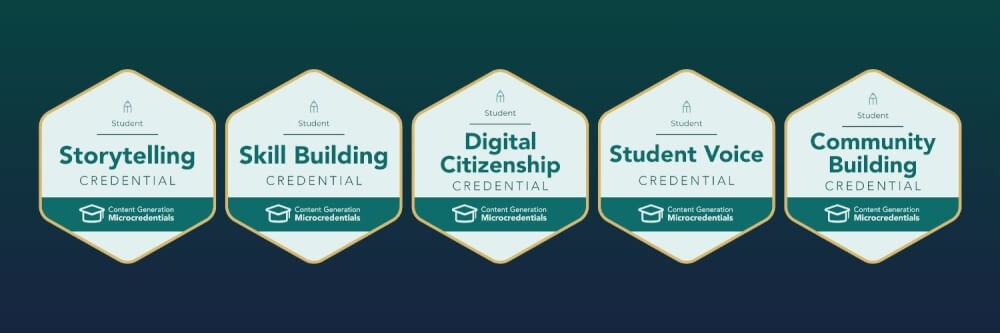
Content Generation Microcredentials are self-paced, 15-20 hour courses that help students build and apply real-world skills. We currently have five areas: Storytelling, Skill Building, Student Voice, Digital Citizenship, and Community Building.
A big part of why we developed them was career readiness. Students who create content for their schools are already practicing skills that extend well beyond social media—they’re learning how to identify a story, interview people, work with others, represent an organization, and make thoughtful decisions about what they publish.
Those are skills employers and colleges care about, and we wanted students to have a way to show them off.
What skills do students actually develop through content creation and Class Intercom Microcredentials?
The five microcredentials each cover a different part of becoming an effective communicator and creator. Storytelling teaches students how to find and share stories that reflect the values, culture, and diversity of a community. Skill Building develops the technical, creative, and professional skills needed to create strategic content. Student Voice focuses on representing perspectives authentically. Digital Citizenship addresses responsible, informed, and ethical communication online. Community Building helps students understand how communication can strengthen connections among organizations and the people they serve.
Those skills apply in a lot of places. A student may eventually pursue communications or marketing, but they may also go into business, education, athletics, nonprofit work, or another field entirely. Knowing how to communicate clearly, collaborate, and use digital platforms responsibly has value across college and career pathways.
What makes earning a microcredential different from simply saying a student has experience with social media?
This is an important distinction. Experience matters, but students also need ways to demonstrate what they learned from that experience.
Each microcredential follows five steps: Learn, Explore, Reflect, Apply, and Showcase. Students work through lessons and activities, then apply what they know through authentic assessment, creating content, campaigns, or strategic plans.
When they successfully complete that process, they earn a microcredential from an organization outside their school. I think that’s important. It gives students another level of validation that they’ve built these skills, and work they can point to as evidence of their abilities on applications for college, internships, and jobs.
“It gives students another level of validation that they’ve built these skills, and work they can point to as evidence of their abilities on applications for college, internships, and jobs.”
Dr. Jill Johnson, President of Class Intercom
How can schools incorporate Class Intercom’s Microcredentials into existing programs?
Microcredentials can become part of onboarding for students before they begin creating content for official school accounts. They can be incorporated into journalism, marketing, CTE, digital media, or leadership courses. They can also be offered as an extracurricular option for students interested in communications, PR, marketing, media, or other related careers.
I think there’s a genuine opportunity for educators and communications professionals to look at what students are already doing and ask, how can we turn this experience into documented learning? The microcredentials add structure around that experience, giving the student a way to improve their craft and come away with proof of what they’ve learned.
What do students receive when they earn a Class Intercom Microcredential?
Students earn a digital badge and certificate for each microcredential they successfully complete. Those credentials can be included in a portfolio, resume, LinkedIn profile, scholarship application, college application, or internship application.
Are Class Intercom Microcredentials only for students?
No. While career readiness and digital literacy for students was a major consideration in developing this program, microcredentials are also available to education professionals.
Educators, administrators, communications professionals, activity sponsors, and others working with student creators can complete them as professional learning.
That can also benefit students. When the adults supporting student content teams understand the same principles around storytelling, student voice, digital citizenship, and strategic content creation, they’re better equipped to coach students as they practice those same skills.
Professionals who successfully complete a microcredential receive a professional badge and certificate of recognition.

What role can educators and school communications professionals play in helping students complete microcredentials?
The biggest role adults can play is giving students a chance to put what they’re learning into practice.
If a student completes a lesson on storytelling, give them a story to pursue. If they’re learning about student voice, give them an opportunity to interview classmates and represent perspectives beyond their own. If they’re working through digital citizenship, incorporate the elements of digital literacy and the decisions that come with publishing content on behalf of a school.
Class Intercom users can access microcredentials through the Class Intercom Learning Center, where administrators or educators can see what students are working on, or have completed after they’ve assigned them courses.
That lets schools connect structured learning with the actual work students are doing, while also helping students keep track of what they’ve accomplished.
What would you say to a Class Intercom school that hasn’t yet introduced its students to microcredentials?
This is a benefit that comes with being a Class Intercom school. It gives you a great opportunity to put your students a step ahead. You probably even have students who are already doing the work.
Who is taking photos at the basketball game? Who is creating videos for a club? Who is interviewing students for the yearbook? Who is interested in journalism, marketing, photography, communications, design, business, or media?
Those students are already beginning to develop skills they can use down the road. They just need the support and structure to turn that into something they can show. Class Intercom schools already have access to these learning opportunities—it’s just a matter of pointing students toward them and giving them that head start.
Turn Content Creation into Career-Ready Experience
Current Class Intercom users can visit the Learning Center via the Help & Resources tab in the Class Intercom app to get started with Content Generation Microcredentials.
Students can complete all five or choose the areas most relevant to their goals, building skills and evidence of learning they can add to portfolios, resumes, applications, and professional profiles.
Schools interested in giving students hands-on experience with school social media while developing communication, digital literacy, and career-ready skills can learn more about Class Intercom and our Content Generation Microcredentials at the link below.