
Florida School Social Media Laws & FOIA Compliance
Florida School Social Media Laws & FOIA Compliance
Social media gives Florida districts a powerful way to tell their story—but it comes with a compliance reality many teams underestimate: under state law, official school social media accounts are public records, open to the same kind of request as a paper file.
Understanding FOIA in Florida
Since 1967, the federal Freedom of Information Act (FOIA) has guaranteed the public’s right to access records held by government agencies. FOIA itself applies to federal agencies, but it set the legal and cultural expectation of transparency that every state has since built on—extending the same basic right to state and local government bodies, including public school districts. Because districts are funded by taxpayers and governed by elected boards, that standard applies to them too, and it covers more than paper records: it covers what they post on social media.
How Florida Extends FOIA
Florida establishes this right at the state level through the Florida Public Records Law, Chapter 119, Florida Statutes, and guarantees it in the state constitution (Art. I, § 24, Fla. Const.). The law applies to every state, county, and district unit of government—including school districts—and defines public records to include documents, electronic data, and other material made or received in connection with official business, regardless of physical form, characteristics, or means of transmission.
The Florida Attorney General has applied that standard directly to social media: in AGO 2009-19, it concluded that material posted on a government agency’s Facebook page in connection with official business is a public record subject to Chapter 119 and the state’s retention schedules. For districts, that means posts, comments, and messages on official accounts should be managed as public records, ready to search and produce on request.
What This Means for Florida School Social Media
- Every post, comment, edit, and deletion across your district’s official accounts may be subject to disclosure—not just what’s currently visible on the page.
- Florida sets no fixed number of days, but courts allow only the reasonable time needed to retrieve records—so delays from manual searches can become a compliance risk.
- Florida’s Attorney General has said social media content tied to official business is a public record, and retention schedules apply to it like any other record.
- Some content may be exempt from disclosure (e.g., student education records), but knowing what qualifies requires careful, consistent review.
- Without an automated system, gathering this information manually can take days; Class Intercom captures it in real time so your team is always ready.
Frequently Asked Questions
Is school social media considered a public record in Florida?
How long must Florida school districts retain social media records?
What is the response timeframe for a public records request in Florida?
Does Florida restrict student cell phone use in schools?
How does Class Intercom help Florida districts stay compliant?
Social Media Archiving, Made Easy for Florida Schools
Class Intercom automatically archives every social media activity across your accounts—posts, comments, edits, and deletions—the moment it happens. Built-in search means responding to a records request takes minutes, not a frantic scramble through screenshots, and one-click export makes sharing archived records with requesters simple.
- Automatic, real-time archival across every account and platform—no manual exports or gaps
- Search and export records instantly for open records requests, with formatted, share-ready reports
- Purpose-built for the recordkeeping and transparency standards Florida schools are held to
- A complete records management system for social media record retention—not just occasional screenshots
- Keyword flagging, comment monitoring, and complete audit trails protect your district’s reputation
Class Intercom brings social media management, community engagement, and archival compliance together in one platform built specifically for schools—so Florida districts don’t need separate systems for publishing, engagement, and records management.
See How Archival Works →
Florida’s Approach to Student Phone Policies
Florida was one of the first states to restrict student phones statewide. HB 379 (2023) banned use during instructional time, and HB 1105 (2025) extended the ban to the full school day for elementary and middle school students. High school students remain restricted during instructional time.
For high schools, § 1006.07(2)(f) allows use when a teacher expressly directs it solely for educational purposes. That’s the provision that lets a journalism or media teacher authorize supervised, in-class use of a tool like Class Intercom for school-sanctioned content creation.
Read the Statute →- Elementary and middle school students may not use wireless devices during the school day (effective July 1, 2025)
- High school students may not use wireless devices during instructional time unless a teacher expressly directs it for educational purposes
- Required exceptions for IEPs, 504 plans, documented medical needs, and administrator-permitted use in designated locations
- Districts must block social media on school networks except when a teacher directs it for educational purposes
Digital Citizenship & Digital Literacy in Florida Schools
Digital citizenship and media literacy matter for Florida students now more than ever—recognizing misinformation, protecting their own privacy, and using social platforms responsibly are skills the state now requires schools to teach. Authentic, hands-on practice—like helping manage real school social media under supervision—builds those instincts far better than a worksheet does.
Social Media Safety Instruction—§ 1003.42, Fla. Stat.
Since HB 379 (2023), Florida requires instruction for grades 6–12 on the social, emotional, and physical effects of social media, including misinformation, the permanence of posts, cyberbullying, online predators, and how to report concerns, plus internet safety instruction for all grades.
Jeffrey Johnston Stand Up for All Students Act—§ 1006.147
Florida’s bullying law covers cyberbullying, including impersonation and posts others can access, on school networks and off campus when it substantially disrupts school. Districts must allow anonymous reporting, investigate promptly, notify parents, and report incidents to the Department of Education.
Florida’s Separate Case Against Meta
When Meta agreed to a multistate settlement in August 2026, Florida declined to join and is pursuing its own case in state court. In October 2026, the Attorney General asked the court for a temporary injunction against Meta over its effects on young users.

What Class Intercom Delivers for Florida Districts
Florida schools are already using Class Intercom to create, schedule, moderate, publish, monitor, and archive great social media—all in one place. The results:
Stronger Community Connections
Build stronger community-to-school connections through consistent, authentic storytelling across every platform.
Creative Student & School Stories
Give students and staff a creative outlet to voice real school and classroom experiences.
Responsible Digital Citizens
Help students learn to be responsible digital citizens while gaining real-world digital marketing skills.
Peace of Mind on Public Records
Rest easy knowing every post is archived and searchable the moment a records request comes in.
Empowering Student Voice in Florida Schools
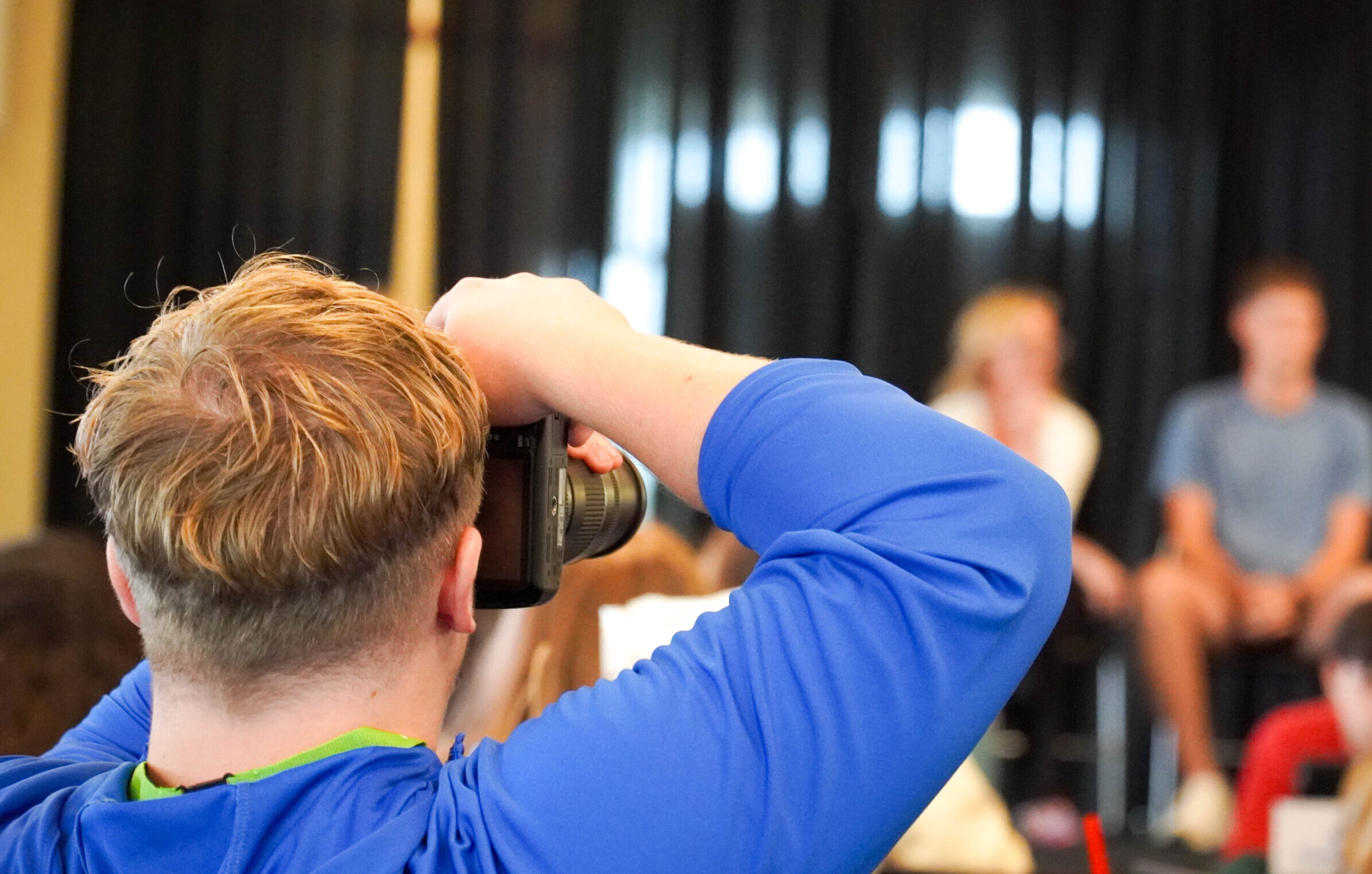
Student voice is integral to telling your school district’s story through social media. With built-in moderation features that encourage collaboration and feedback among students, educators, and administration, Class Intercom empowers students to safely take ownership of their school’s narrative—while gaining real-world digital marketing skills and practicing responsible digital citizenship.
Learn MoreResources for Florida Schools
Primary sources for everything referenced on this page—bill text, statutes, court filings, and agency guidance—so your team, your board, or the press can verify the details firsthand.
See Public Records Laws in All 50 States →Meta State AGs’ Consent Judgment & Settlement Agreement
The consent judgment behind the multistate Meta settlement that Florida declined to join, referenced in the Digital Citizenship section above.
Best PracticesEmpowering Student Content Creators Amid Phone Bans
How to keep student journalism and content programs running under phone-restricted school days, including teacher-permitted educational use.
Statute TextFlorida Public Records Law—Chapter 119
The Chapter 119 definitions, including the public records definition that covers material in any form or means of transmission.
AG OpinionFlorida Attorney General Opinion AGO 2009-19
The Attorney General’s opinion that content on a government agency’s Facebook page is a public record subject to retention schedules.
Agency GuidanceGeneral Records Schedule GS7 for Public Schools
The Department of State’s retention schedule for Florida public schools, Pre-K–12.
Statute TextStudent Wireless Device Rules—§ 1006.07
The statute setting school-day and instructional-time device restrictions, required exceptions, and teacher-directed educational use.
Statute TextBullying and Harassment—§ 1006.147
The full statute covering bullying and cyberbullying policy requirements, reporting, and investigations.
Press ReleaseFlorida Attorney General—Temporary Injunction Against Meta
The Attorney General’s announcement of Florida’s request for a temporary injunction in its own case against Meta.
Policy ExampleBroward County Public Schools Social Media Guidelines
An example of how one Florida district documents social media use, including public records and retention expectations.
Ready to Simplify Compliance & Community Engagement for Your Florida District?
See how Class Intercom brings social media management, community engagement surveys, and archival compliance together in one platform built for schools.