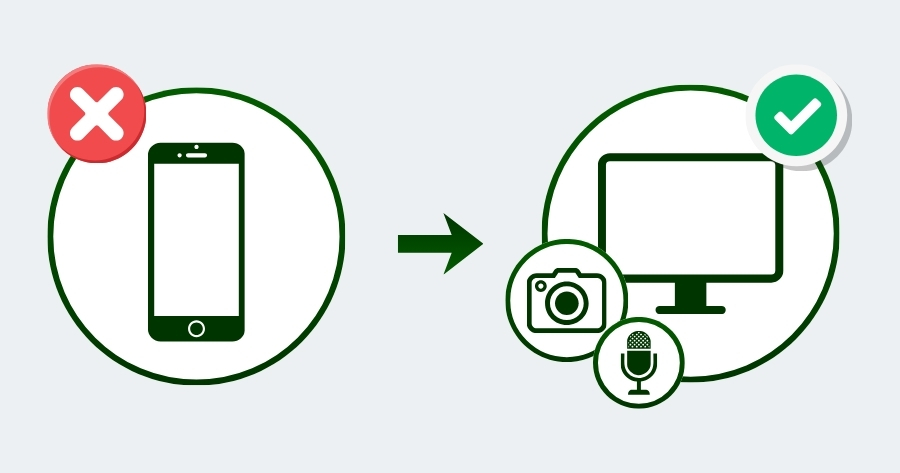
In some states and districts, schools are beginning to adopt tighter student cell phone policies, limiting use during the school day.
Texas made national headlines with the introduction of House Bill 1481, requiring public schools to prohibit student use of personal communication devices during instructional hours. Other states have enacted similar legislation. And even in places without statewide mandates, districts are independently adopting more restrictive policies.
For many educators and school PR professionals who have worked hard to empower student content creators, these changes raise an understandable concern: If students can’t use their personal phones during class, does student storytelling have to stop?
The answer is an enthusiastic no!
Phone restrictions are designed to reduce distraction and protect instructional time, both of which we fully support. Their goals typically do not include eliminating things like student voice, digital citizenship education, or authentic storytelling. With thoughtful structure and clear systems, schools can absolutely support both focused classrooms and empowered student content creators.
Here are six practical ways to adapt student media programs in alignment with phone-ban policies.
1. Use School-Issued Devices for Content Creation
Many statewide policies specifically exclude school-issued devices from restrictions. That’s an important distinction.
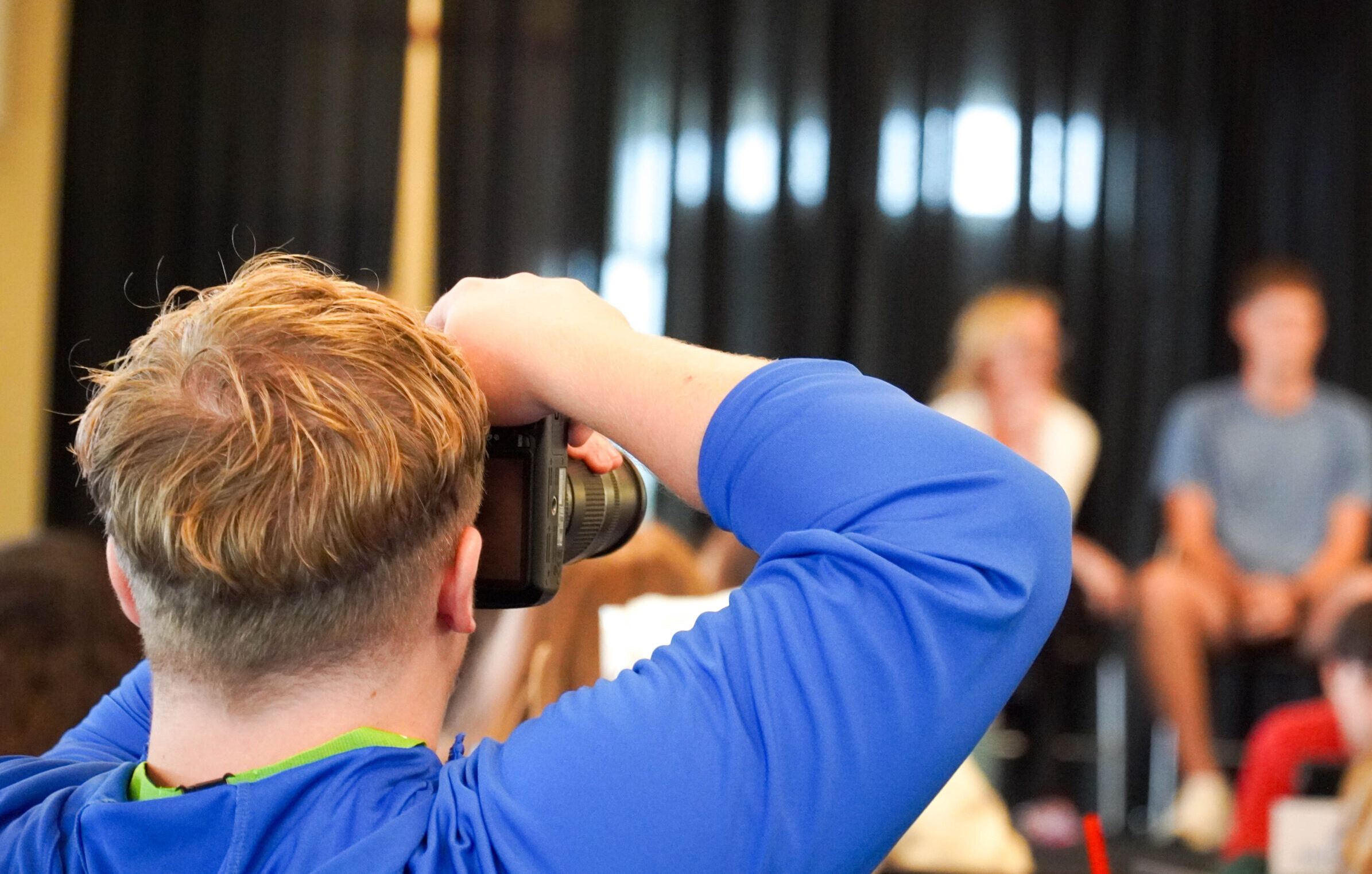
If personal phones are off-limits during the school day, districts can still provide designated equipment for student media programs. This might include shared smartphones, tablets, DSLR cameras, microphones, or full content creation kits assigned through journalism, yearbook, or digital media classes.
When equipment is school-owned and used under teacher supervision, its use remains policy-aligned. Students still gain hands-on experience capturing interviews, photographing events, and producing multimedia content as thoughtful creators operating within policy boundaries.
An added benefit? Students expand their technical skillsets. Learning to use DSLR cameras, audio equipment, and editing tools builds transferable, career-ready skills that extend well beyond social media content creation.
2. Establish Clear & Defined Exceptions for Student Content Creators
Not every policy is a complete ban, and in districts where flexibility exists, clarity is key.
At Medicine Hat Catholic Board of Education in Alberta, they’ve implemented a press pass system for approved student content creators. Students authorized to capture media during certain class periods carry visible credentials that outline the policy. If questioned by another staff member, they can clearly show their explicit permission to use their phones for school storytelling.
In addition to their press pass system, Medicine Hat students submit and collaborate on content through a central platform designed specifically for schools called Class Intercom. Rather than logging into social media accounts directly, students draft and upload their content inside this secure system, where educators review and approve posts before anything is published publicly.
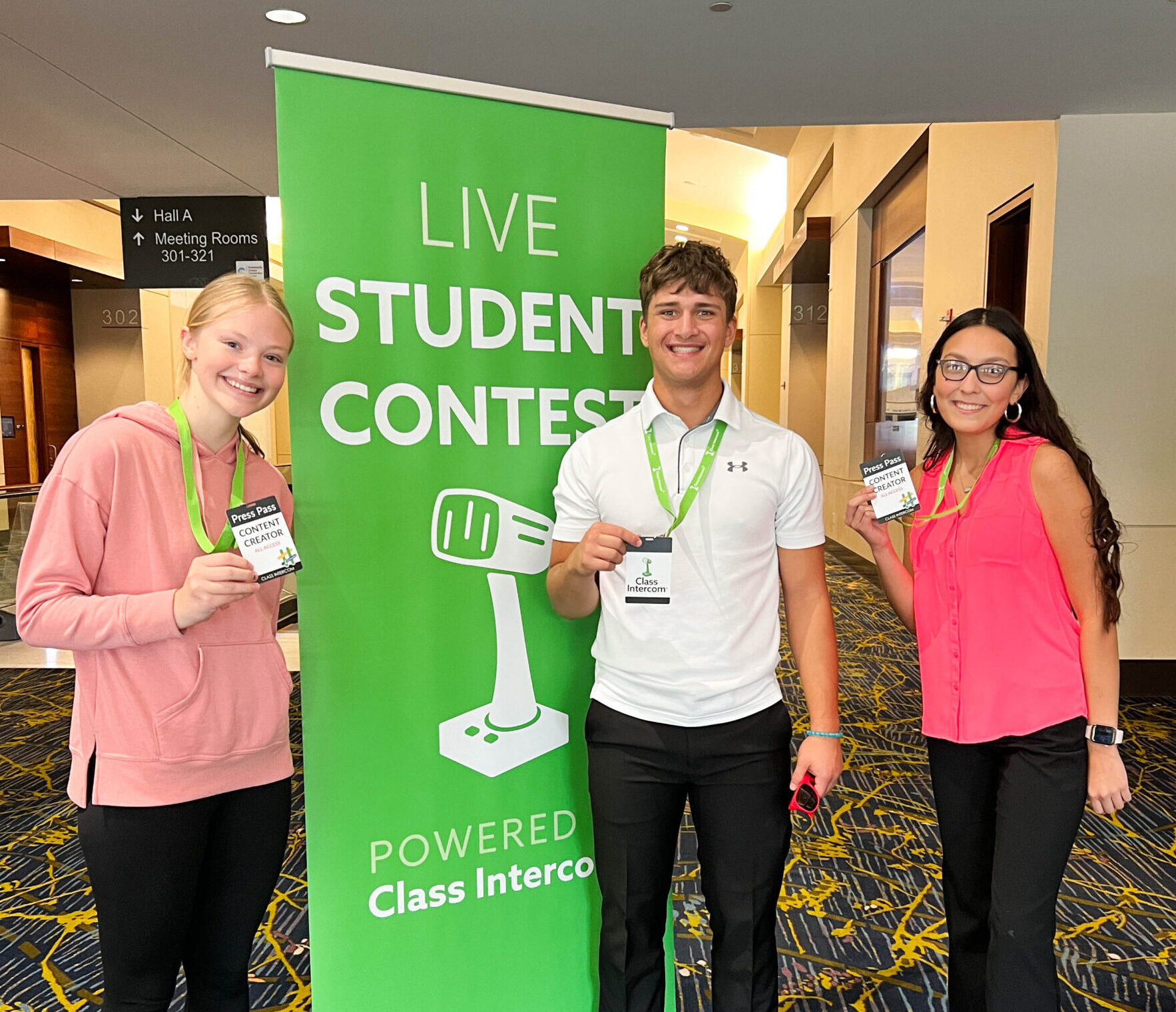
Students hold up press passes at a live student social media contest.
This kind of structure removes confusion. It protects students from unnecessary disciplinary action while reassuring staff that guidelines are being followed.
Even in districts with stricter policies, similar systems—like supervised device checkouts during designated class periods—can ensure compliance while allowing for students to utilize cell phones for instructional purposes.
If students are found to be misusing their cell phones, educators can simply revoke privileges. However, it is most commonly the case that students can be trusted and will act responsibly when expectations are clearly outlined.
And when content is moderated through a platform like Class Intercom, the accountability loop is closed. Educators can see exactly who submitted content, when it was drafted, what revisions were made, and when it was reviewed and approved. That transparency not only supports policy compliance, it turns student storytelling into authentic assessment. Where learning, feedback, and publication are all part of a structured educational process.
3. Encourage Content Collection at After-School Events
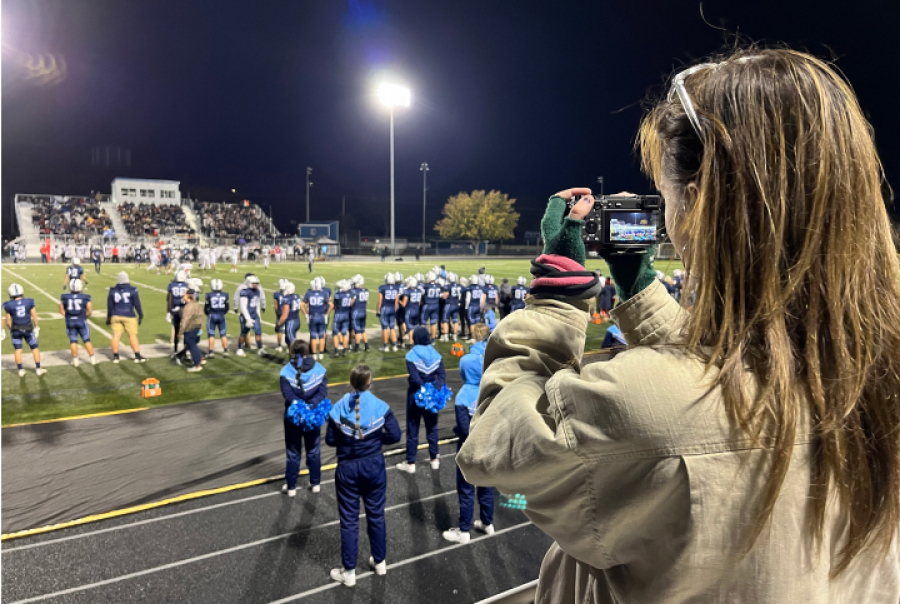
Many device bans apply specifically to school hours. That means athletic events, performances, club meetings, and community programs often remain open opportunities for content collection. Volunteer hours and community service initiatives are especially powerful storytelling moments, giving schools the chance to highlight real-world impact, partnerships, and service learning beyond the classroom.
Students can gather interviews, capture photos, and record videos after school, then utilize class time to write captions, edit footage, and schedule posts using approved devices.
This model mirrors professional workflows. Content is rarely captured and published in the moment. Instead, creators collect material onsite and return to their workspace for drafting, editing, and review.
Working this way encourages planning and intentionality. Students think ahead about what media they need, what questions to ask, and how the final story will come together. The result is often stronger, more strategic storytelling.
4. Collaborate With Existing Media Programs
Student storytelling on social media does not have to happen in isolation.
Yearbook teams, broadcast classes, athletic department photographers, and even classroom teachers are already capturing moments across campus. Partnering with these groups to create a dedicated school social media content team allows students to work from shared photo and video libraries and contribute to a more unified school storytelling effort.
Photography and videography are only one part of the content creation process. Students work together to craft narratives, develop campaigns, write captions, and analyze engagement without the burden of having to personally capture every piece of media. Curating content and thinking critically about trends over time makes for even more depth of learning and experience.
In short, collaborating across student and even staff teams builds content planning skills, strengthens cross-team collaboration skills, and reinforces brand consistency. It also ensures that student stories traditionally confined to print publications or internal platforms gain broader visibility online.
5. Structure the Conversation Around Instructional Purpose
It’s important to acknowledge why many schools are tightening phone policies in the first place. Educators are trying to ensure students are not distracted in class. They want to create classroom environments that minimize interruptions and promote learning.
Student storytelling programs should align with that mission not compete with it.
When content creation exists as skill-building and digital citizenship education, its instructional value becomes clear. Students strengthen writing, design, rhetorical strategy, collaboration, and media literacy skills. By producing publishable work that represents their school community, they participate in authentic assessment that prepares them for future academic and career opportunities.
The conversation shifts from “Can students have their phones?” to “How can we responsibly teach modern communication skills within district guidelines?” That reframing helps administrators and educators move forward together.
6. Utilize Class Intercom to Keep Student Storytelling Policy-Aligned
As schools navigate stricter personal device policies, students learning about social media content creation need a way to contribute without having native access to social platforms on their smartphones.
Class Intercom was built specifically for this purpose. Students do not log into Instagram, Facebook, or any other social platform. They never need direct access to public-facing accounts. Instead, they plan, create, upload, and draft content inside a secure, web-based platform that works on any approved school device, including Chromebooks and district laptops.
Content moves through a moderated workflow before it is ever published. Educators set roles and permissions. Every post is archived automatically. There’s oversight and supervision at every step.
In phone-restricted environments, this is incredibly important. Students can participate in authentic school storytelling without personal device use. Educators maintain control. District leaders gain peace of mind knowing policies are being upheld. And the school’s social media feeds benefit from more consistent, engaging content.
Cell phone restrictions do not mean students can no longer contribute to school social media. With the right systems in place, the policies actually make for a more intentional, secure, and educationally-rich approach to content creation.
By aligning programs with policy, defining clear workflows, and utilizing tools designed specifically for education, you can continue empowering student content creators responsibly and confidently.
Interested in getting student storytellers involved with your school’s social media while staying aligned with your district’s phone policies? Get in touch at the link below to learn more about how Class Intercom supports compliant, student-driven storytelling.